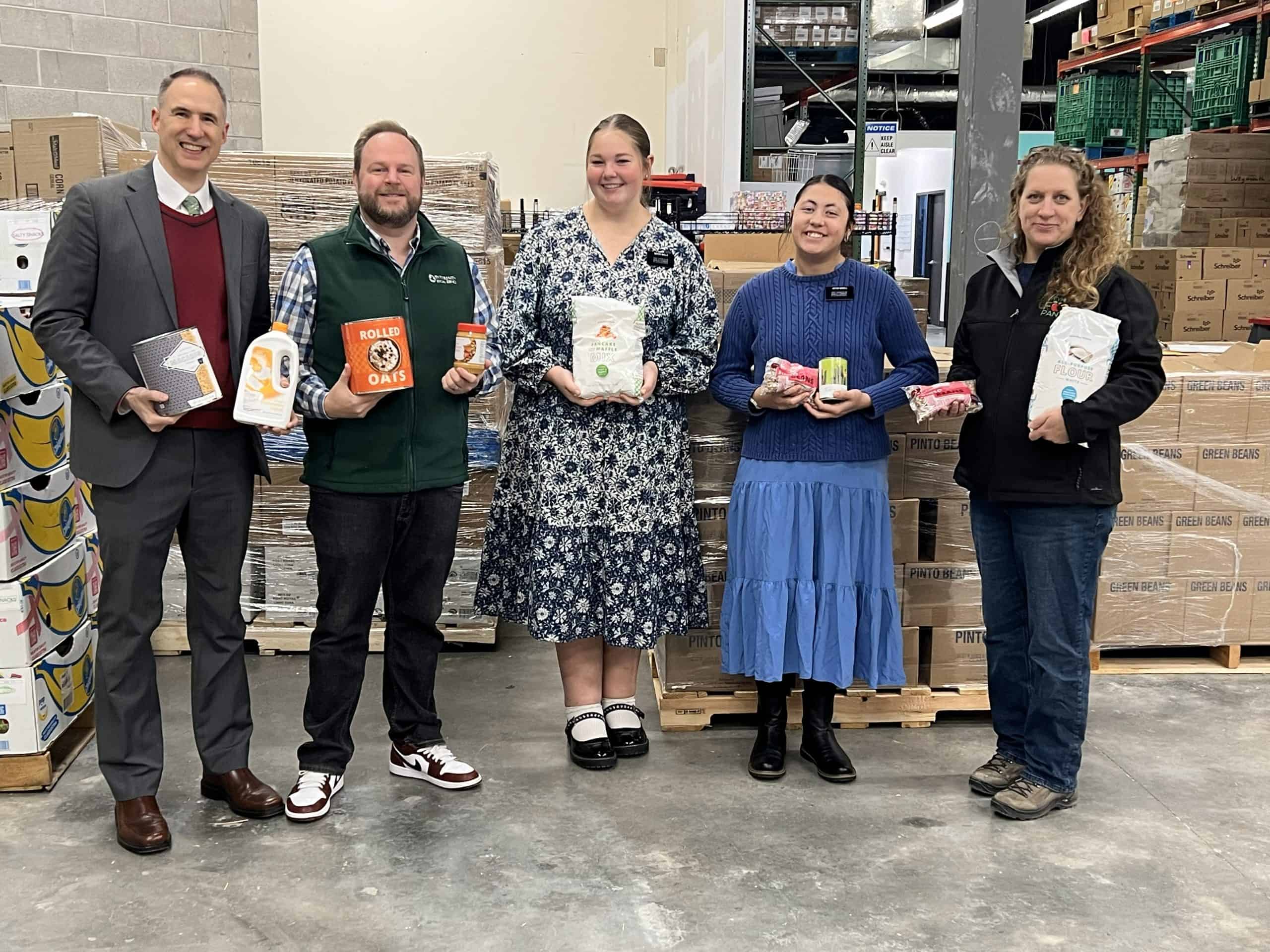
On Friday December 6, a tractor trailer full of nonperishable food left Salt Lake City Utah enroute to Massachusetts. Early in the morning on Monday December 9, the truck arrived in Rockland, MA and unloaded 40,000 pounds of food donated by The Church of Jesus Christ of Latter-day Saints to feed thousands of South Shore families in need.
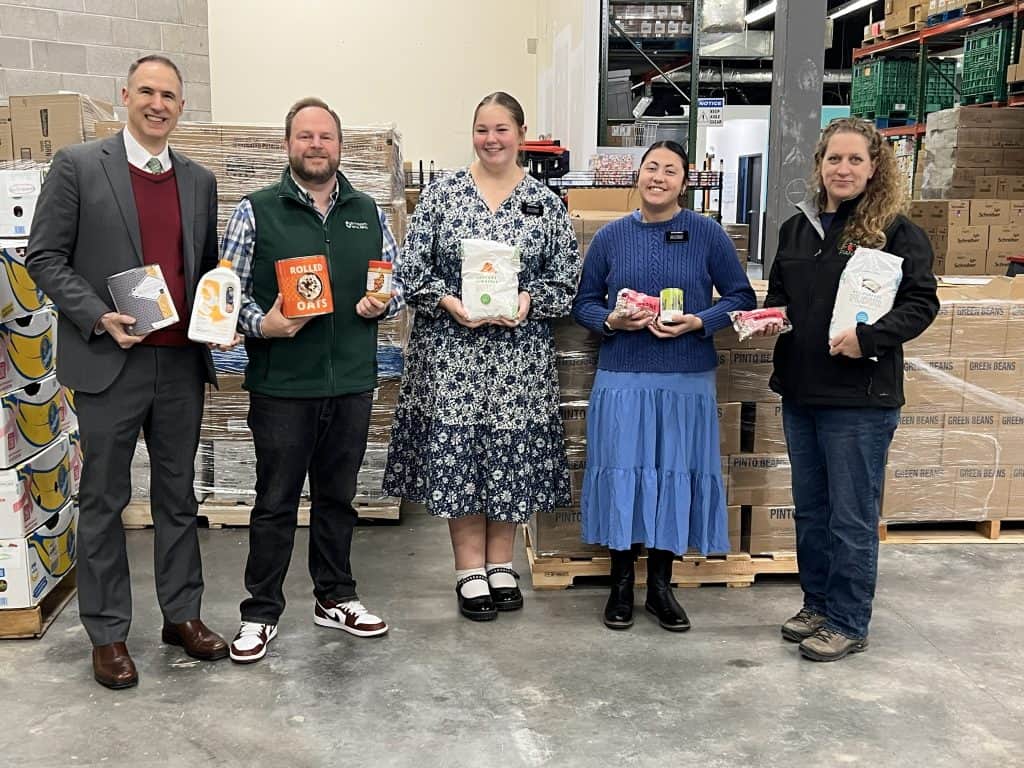
Photo Caption (from left to right): Jeremy Medford – President of the Hingham Massachusetts Stake of The Church of Jesus Christ of Latter-Day Saints, Rick Doane – Executive Director of Interfaith Social Services, Sister Balls and Sister McKell Missionaries for The Church of Jesus Christ of Latter-Day Saints and Pam Deholm – Executive Director of The South Shore Food Bank.
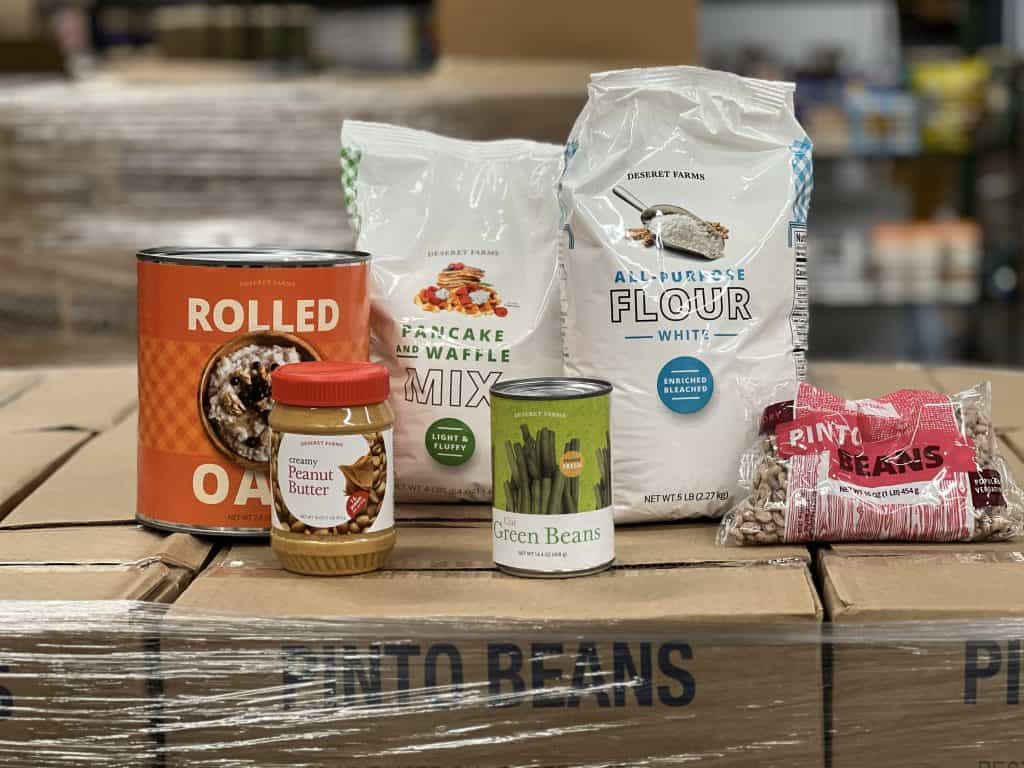
The 28 pallets of food contained essentials like: rice, macaroni, green beans, dishwashing liquid, flour, beans, carrots, carrots, diced tomatoes, peanut butter, oats, as well as some fun items like pancake mix, cake mix and hot cocoa. All of the donated items were grown, processed and packaged by Church-owned farms, ranches, and production facilities like canneries, dairies, and mills. They process the goods using volunteer labor, plus donations from Church members. These resources provide basic foods and household items to people in need, regardless of their faith.
This 40,000 pound food donation will be split between two local food pantries: Interfaith Social Services and The South Shore Food Bank.
Since 1947 Interfaith Social Services has been a safety net for thousands of children and families who are struggling to make ends meet. Located in Quincy, MA; Interfaith operates one of the largest emergency food pantries in Greater Boston – distributing food and essential hygiene products to local residents in need. Interfaith also operates a mental health counseling center, homelessness prevention program as well as coordinating several large-scale seasonal initiatives that bring joy to local children living in poverty.
The South Shore Food Bank is a regional food access hub for food-assistance organizations across 28 South Shore communities in Massachusetts. In 2024, more than half of food distributed by food pantries on the South Shore moved through their warehouse, benefitting almost 30,000 residents across the region. They also operate two large scale food pantries in Weymouth and Randolph. Their mission is to improve food access, food equity, and promote health.
Both food pantries report record setting levels of need amongst local families in Southeastern Massachusetts. Each food pantry provides groceries to 2,000+ households each month.
This is the second time The Church of Jesus Christ of Latter-day Saints has made a donation of this size to the two organizations. The last time was in 2020 at the height of the pandemic.
Full SNAP benefits in Massachusetts have been distributed to those who missed payments last week. The state says these benefits are active and immediately available, and residents can use them now to purchase food.
The State’s Department of Transitional Assistance (DTA) says households that normally get funds on the 10th through the 14th of the month will get full benefits on their normal date this week, barring further action from the administration and courts.
Our Food Pantry remains OPEN to those who need it. Please see https://interfaithsocialservices.org/food/ for more information about the towns that we serve, the hours we are open and what you should bring with you if you are visiting for the first time.
*********
UPDATE 11/4/2025
The government said Monday that it will partially fund SNAP for the month of November. They will use an emergency fund, which will cover about half of normal benefits.
We are not yet sure how much SNAP recipients will receive, or when the funds will be deposited on EBT cards. The USDA has said that it can take some time to figure out how to send out reduced benefits.
Each month, Massachusetts families, seniors and disabled individuals use the SNAP program to purchase approximately $240 million of groceries. That burden has now shifted to food pantries. Even with a partial release of SNAP funds it still leaves food pantries on the hook for half of the groceries that would have been purchased by individuals who depend on this vital resource. We hope and pray that our elected officials reach a resolution on this topic soon.
FOR CLIENTS:
The Food Pantry remains OPEN and we continue to serve clients once every 30 days. We ask for your patience as you visit this month, as we anticipate being very busy.
For those visiting our pantry for the first time, please see https://interfaithsocialservices.org/food/ for details on the towns that we serve, the hours we are open and what you should bring with you in order to register.
Other Food resources to utilize:
The FoodSource Hotline provides a full list of food assistance resources in Massachusetts: 1 (800) 645-8333
State funded programs will continue normally. Residents can still access WIC.
Children are still able to access FREE breakfast and lunch at public schools on school days.
If you have at least 1 cent on your EBT card, you can access the Massachusetts Healthy Incentives Program (HIP) to buy produce from local farm vendors. More information here: https://www.mass.gov/info-details/massachusetts-healthy-incentives-program-hip-frequently-asked-questions
HOW TO HELP:
We are still very much in need of monetary donations to purchase fresh, healthy foods for our neighbors in need.
Cash donations allow us to remain flexible and efficient – we can purchase what we need, when we need it.
While we prefer monetary gifts at this time, we ask that if you do decide to donate non-perishables to us, please do so within our open hours. Please do not leave food at our doors outside of business hours, as it attracts pests.
The non-perishable donations that are most helpful right now are pasta, pasta sauce, 1 or 2 pound bags of rice, boxes of cereal, diapers, and pads & tampons.
Please take a minute to watch this message from our executive director, Rick Doane.
*********
POSTED 10/27/2025 – 9am
We are closely monitoring the federal government shutdown and its effect on the Supplemental Nutrition Assistance Program (SNAP). More than 1 million Massachusetts residents, including 300,000 children, currently receive these benefits (16% of MA residents).
The USDA has posted a notice on its website saying federal food aid will not go out Nov. 1. It is unclear whether Massachusetts will use the “Rainy Day” fund to make up the difference in SNAP benefits until the shutdown ends. We are awaiting more information.
FOR CLIENTS
Our Food Pantry is OPEN and currently serving clients. We are privately funded and do not receive funds from the federal government.
We are encouraging all our clients to reach out to the FoodSource Hotline to get a full list of food assistance resources available to them. They will provide you with all of the pantries and meal programs that you are eligible for. 1 (800) 645-8333
We ask for your patience as you visit our Food Pantry and other food programs.
We need you! The best way to support our Food Pantry at this time is through financial donations. We anticipate needing to purchase a much higher volume of food in the next month. With our partnerships, our purchasing power goes far beyond than the average grocery store consumer and we’re able to make your dollar stretch much, much further.
We pride ourselves on providing fresh, healthy food to our client families and will continue to do so. Funds are needed to purchase proteins, fruits and vegetables, milk & eggs, alongside the pantry basics. We greatly appreciate any support you are able to give. https://interfaithsocialservices.org/food/?form=donate
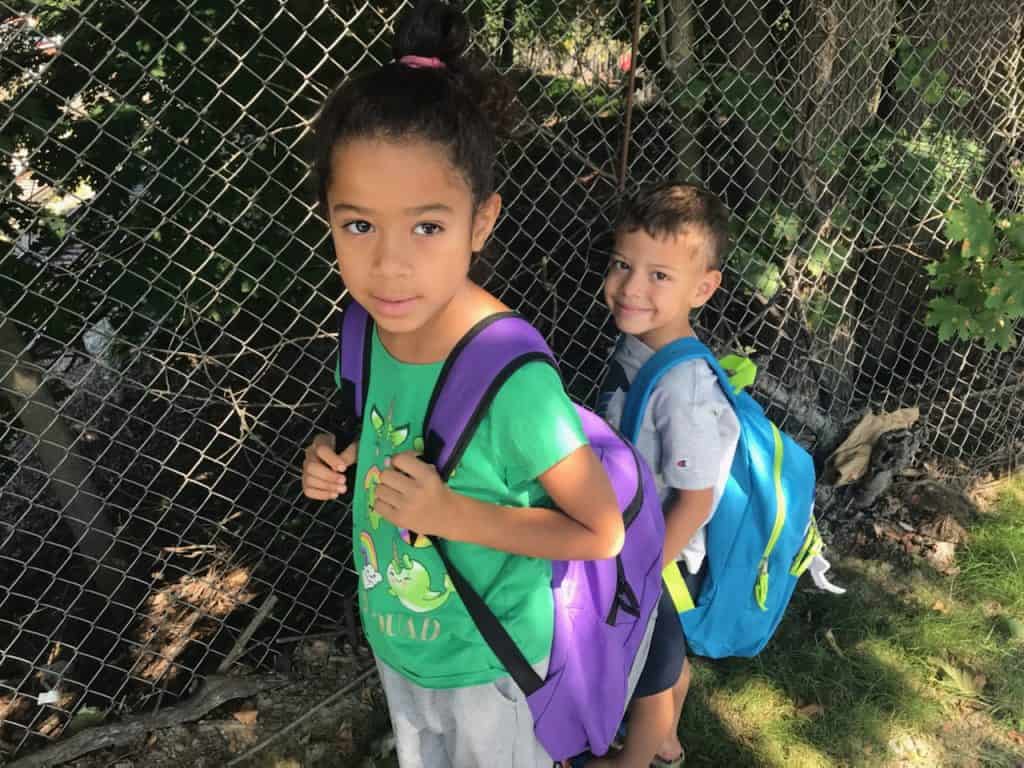
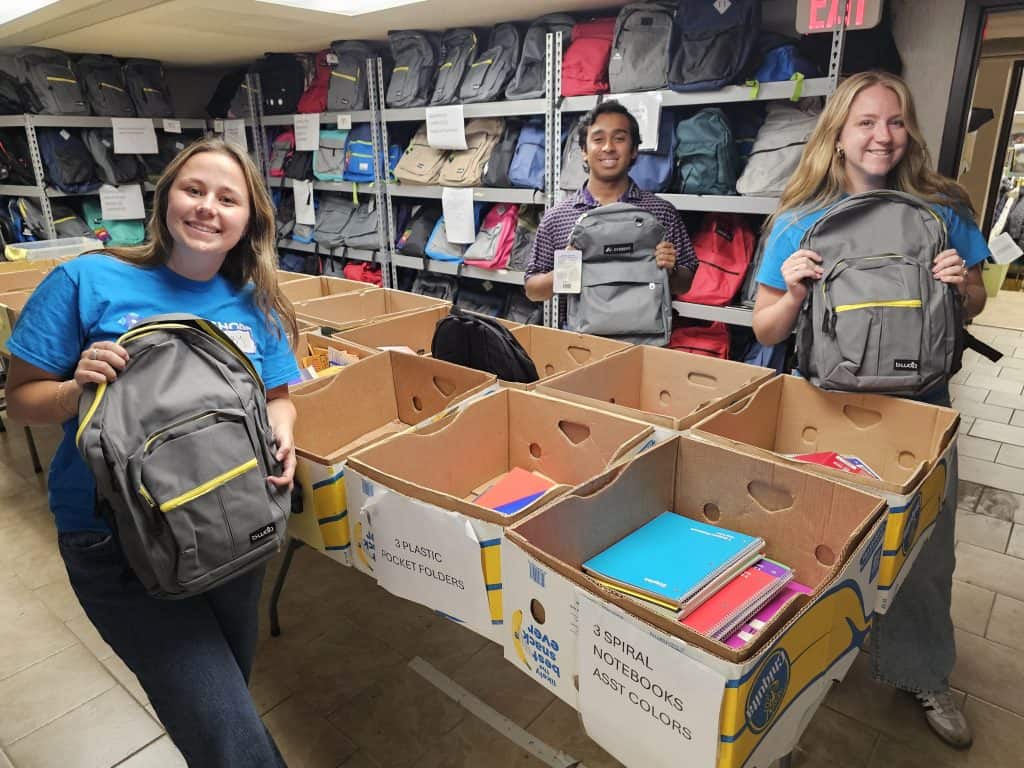
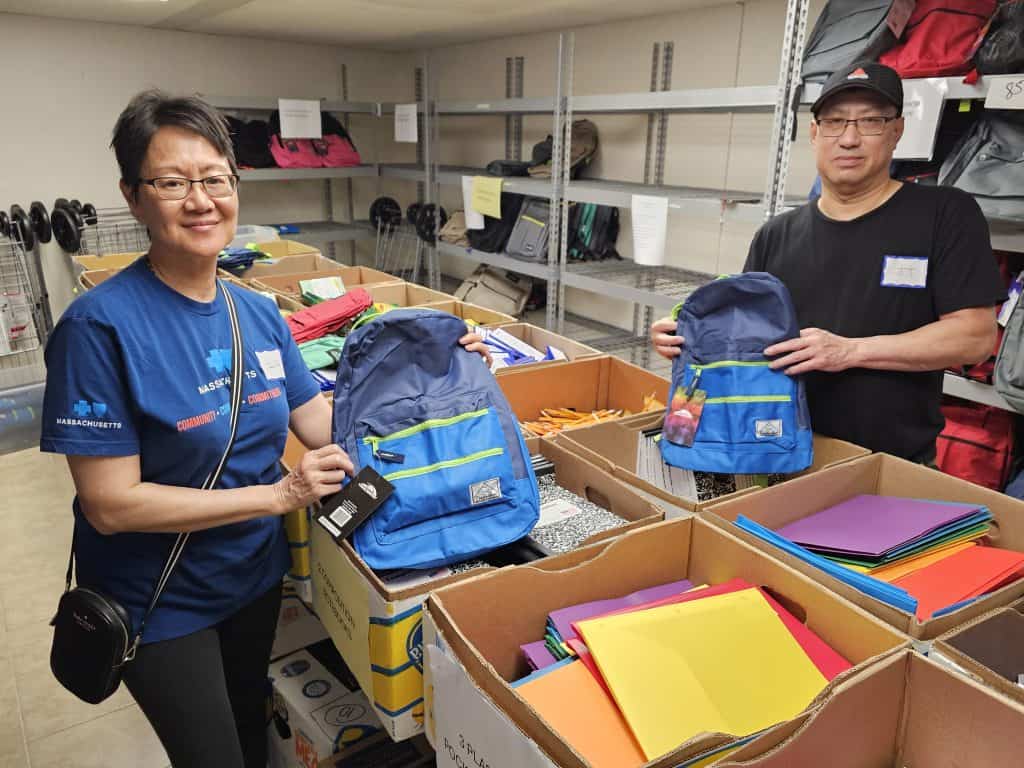
Interfaith Social Services distributed 950 backpacks during the month of August to help ease the burden of back-to-school expenses for South Shore families in need.
THANK YOU to the many generous individuals, businesses and organizations who provided backpacks, school supplies and monetary contributions to make sure that all the children whose families utilize Interfaith’s programs were able to start off the school year on the right foot.
“We are so thankful to our generous donors! Our community made this possible,” said Roberta Ferguson-Gregg, Assistant Food Pantry Manager. “It is our hope that because these children will have their own school supplies and brand-new backpacks on their first day of school, their academic performance and self-confidence will be boosted. Education is a powerful tool in overcoming poverty, which is why our Backpack program plays a vital role in supporting their success now and in the future.”
Corporate volunteer groups from Blue Cross Blue Shield Massachusetts and South Shore Bank helped to assemble hundreds of bags, filling them with school supplies.
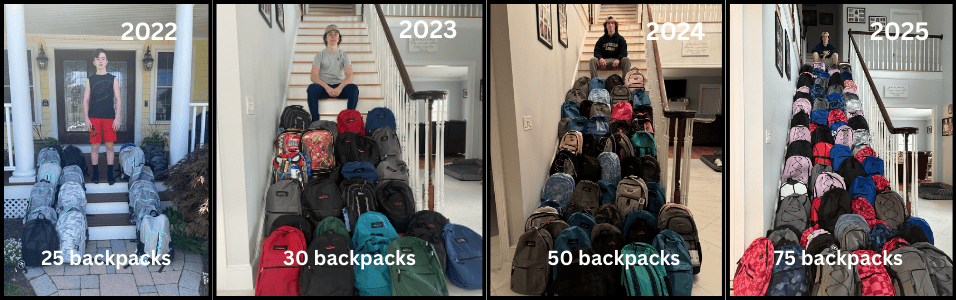
Xaverian Brothers student Michael McGrath also participated in the Drive for the fourth year in a row, raising funds to fill 75 backpacks with supplies. Over the summer, McGrath asked friends and family for financial support, and the teen purchased supplies and assembled all 75 bags before delivering them to Interfaith. Thank you so much for your continued support, Michael!
To learn more about Interfaith’s seasonal programs, please contact Assistant Food Pantry Manager Leslie Wittmann at leslie@interfaithsocialservices.org or 617-773-6203 ext.26.
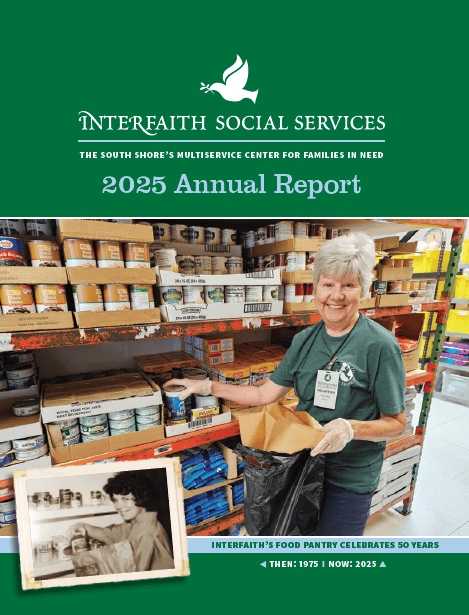
Fifty years ago, Interfaith’s staff members saw a need in our community and responded with a simple act of compassion. In a small closet, filled with a handful of donated canned goods, our food pantry began. It was a pioneering effort – our emergency food program here in Quincy was one of the first food pantries in the country. The mission in 1974 was clear and it remains a bedrock principle of all that we do: provide a welcoming place where our neighbors can find nourishment and hope.
Looking back, it’s incredible to see how far we’ve come. That small closet has blossomed into a bustling, comprehensive resource—one of the largest food pantries in Greater Boston. The transformation reflects not only the growing needs of our community but also the incredible generosity of partners like you.
In this year’s report you’ll learn all about the impact donations from our community had on our organization.
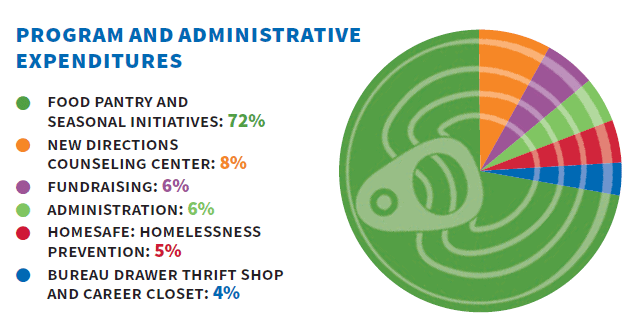
89% of every dollar donated directly supports our programs
Just 11% goes toward administrative and fundraising costs – well below the industry standard of 20-35%.
And we take the time to thank our donors
THANK YOU! Businesses, organizations, houses of worship and individuals who gave $100 or more in monetary donations for our 2025 fiscal year (July 1, 2024 through June 30, 2025) are listed in this year’s report.
The Bureau Drawer Thrift Shop is kicking off summer with a huge Tent Sale on Saturday, July 12! Join us under the tents between 10a-3pm for huge discounts on tons of merchandise.
The Tent Sale will be held rain or shine. Tents will be set out front of our building at 101 Adams St., Quincy, MA. In case of heavy rain, we’ll move inside the building.
The Thrift Shop will also be open for browsing when you’ve finished shopping under the tents!
Gardeners with a knack for growing produce are encouraged to participate in our annual Plant.Grow.Share. program, an effort brought forth by local food pantries and Keohane Funeral Home. The program encourages gardeners to PLANT an extra row, GROW produce at home, and then SHARE a portion of their harvest with community members in need.
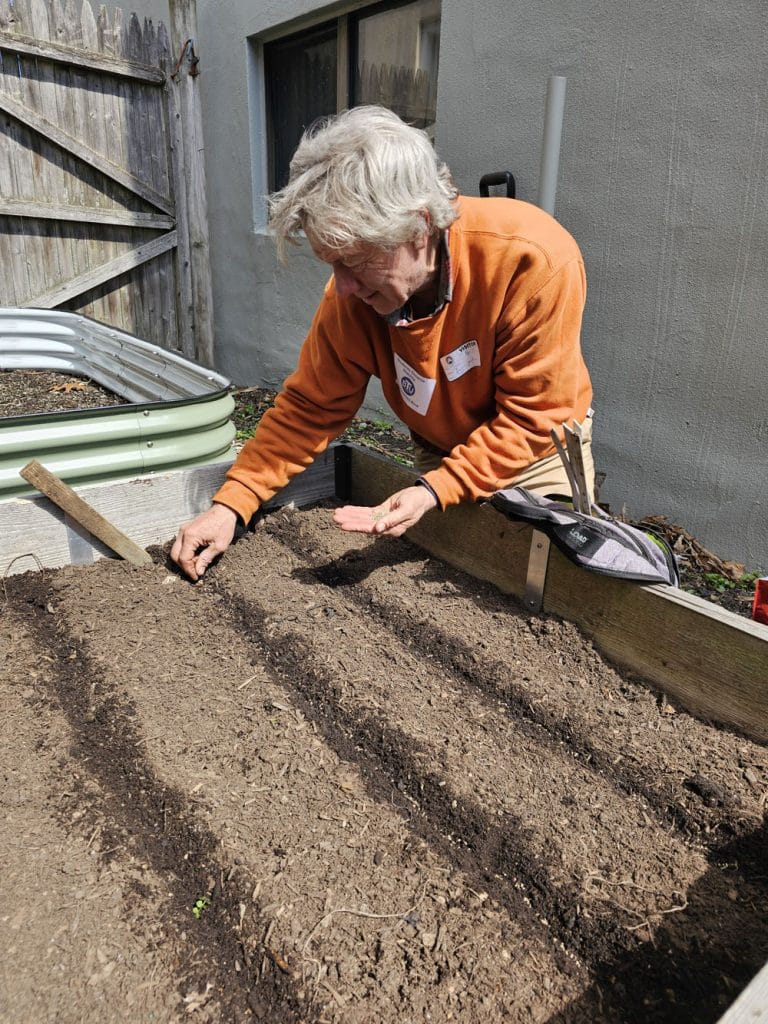
Jon Belber, Community Outreach and Farm to Food Pantry Director at Holly Hill Farm in Cohasset, plants carrot seeds in Interfaith Social Services’ alley garden in Quincy during his April Carrot-By-Cycle ride. Holly Hill, Interfaith, Weymouth Food Pantry and Keohane Funeral Home are promoting their annual Plant.Grow.Share. program, encouraging home gardeners to plant extra produce for local pantries.
“Since 2010, team Keohane has partnered with Interfaith and Weymouth to provide fresh fruit and vegetables to the area food pantries,” said John Keohane, Co-President of Keohane Funeral Home. “We believe that positive nutritional choices are a key element in growing healthy outcomes in the local community.”
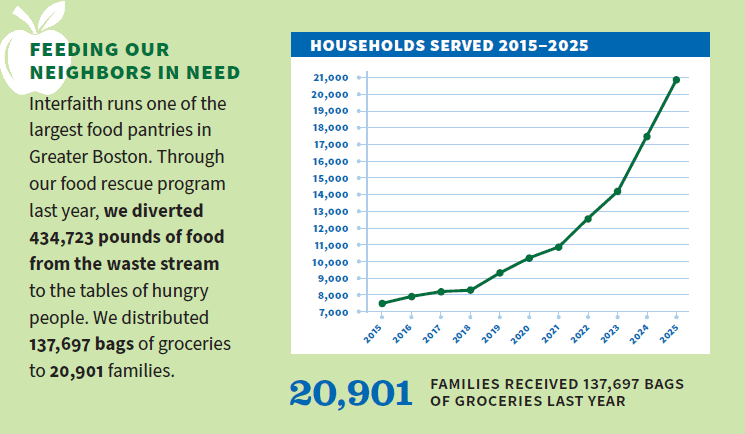
The number of families and individuals facing food insecurity in Massachusetts continues to increase, and thus, there is a rising need for more fresh fruits and vegetables at area food pantries. “Food pantries across the state have seen significant increases in clients reaching out for assistance,” said Rick Doane Interfaith Social Services’ executive director. “Here at Interfaith’s food pantry, the number of individuals we serve has tripled over the last decade. We have gone from distributing 35,000 grocery bags annually to more than 100,000. One of the items most requested by clients is fresh fruits and vegetables.
Focus on Fresh
While many food pantries nationwide still focus on distributing easy-to-manage nonperishables, several local pantries, including Interfaith and Weymouth, have updated their facilities to be able to provide fresh foods. This includes fresh produce, milk, eggs and proteins.
“Fresh food at food pantries improves health and dignity, ensuring everyone has access to nutritious options,” said Pam Denholm, Executive Director of Weymouth Food Pantry. “Locally grown produce from neighbors’ gardens strengthens food access while fostering sustainability and community engagement. These efforts not only make us more resilient, and broaden food infrastructure right in our neighborhoods, but also increase the variety of food offered at pantries, making a meaningful difference for neighbors relying on the pantry for help.”
On-Site Gardens
Over the past 15 years, hundreds of individuals have taken part in the program. Many local businesses, including Quincy Police Department, Blue Cross Blue Shield of Massachusetts, and several area churches have participated in Plant.Grow.Share. by planting vegetable gardens at their organizations and donating the harvests. Volunteers at Interfaith also plant a vegetable garden in the alleyway next to their building in Quincy, to both provide produce to the pantry and to demonstrate that food can be grown in urban environments.
Weymouth Food Pantry operates a food pantry garden at Old South Union Church in Columbian Square and invites potential volunteers to pop in on Saturday mornings to assist in the effort to grow food for neighbors who visit their pantry.
Holly Hill Farm in Cohasset also participates in Plant.Grow.Share. by donating more than 4,500 pounds of their annual fresh vegetable and flower harvests to seven South Shore food pantries. Jon Belber, Holly Hill’s Community Outreach and Farm to Food Pantry Director, has provided workshops and gardening guidance for the program, and this year undertook a 60-mile bicycle ride from Cohasset to Boston and back, sowing carrots at schools and food pantries across the South Shore.
Keohane Funeral Home will participate in Plant.Grow.Share. this year by acting as a drop off spot for fresh grown produce. Gardeners will be able to leave their harvest donations at the Quincy and South Weymouth Keohane locations and staff will deliver them to the pantries.
Where to Donate
Home gardeners can drop their produce donations at the following locations:
Keohane Funeral Home
785 Hancock Street, Quincy
Drop off Monday-Friday, 9am-4pm
Ring the front bell
McDonald Keohane Funeral Home
809 Main Street, S. Weymouth
Drop off Monday-Friday, 9am-4pm
Ring the front door bell
Interfaith Social Services Food Pantry
105 Adams St., Quincy
Drop off Monday, Wednesday, Friday – 12:30-3:30pm; Tuesday & Thursday – 12:30-7pm; Saturday – 10am-3:30pm
Use rear food pantry or thrift shop door for food donations
Weymouth Food Pantry Warehouse
40 Reservoir Park Drive, Unit B, Rockland
Drop off Monday-Friday, 10am-1pm
Weymouth Food Pantry Popup The First Church in Weymouth 17 Church Street, Weymouth
Drop off Tuesday mornings 8-10am
Weymouth Food Pantry Popup Crossroads Worship Church 241 Broad Street, Weymouth
Drop off Thursday mornings 8-10am
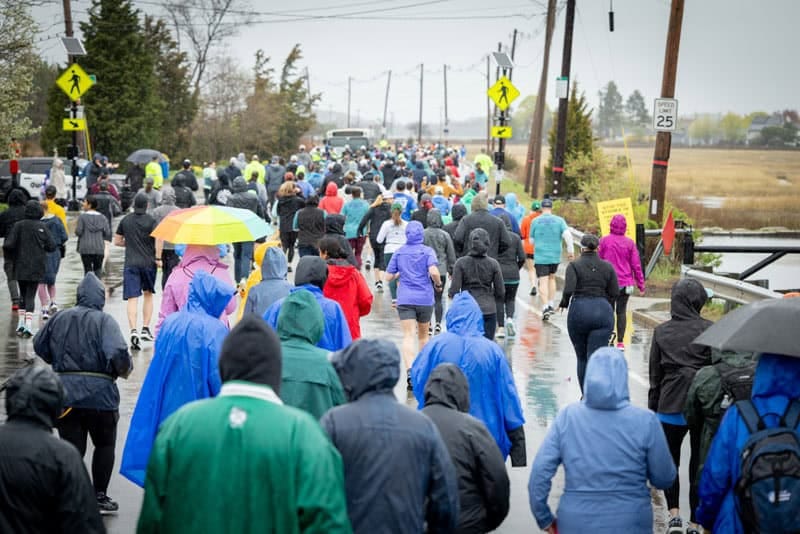
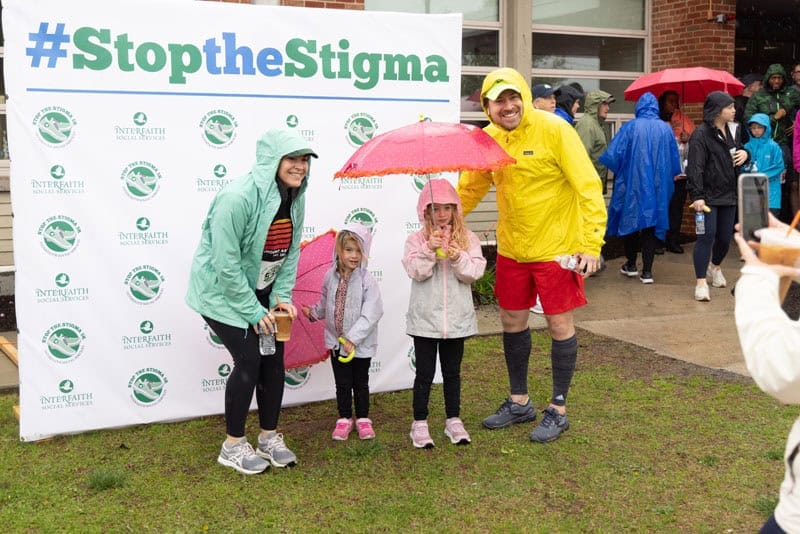
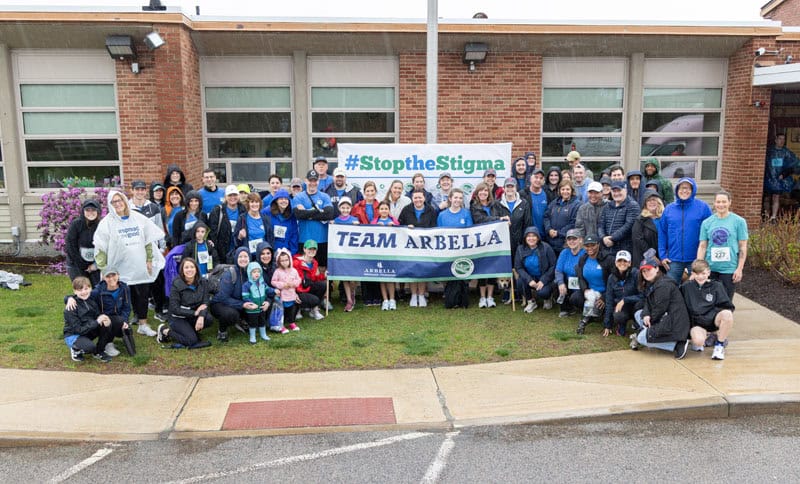
Hundreds of runners and walkers defied the rain and took to the streets of Quincy’s Squantum neighborhood for Interfaith Social Services’ 51st annual Stop the Stigma 5K. The event, which raises funds and awareness for mental health and addiction care, brought in more than $150,000 to fund counseling sessions for those in need at our New Directions Counseling Center. Nearly 900 supporters signed up to take part in the April 26 event and over 600 runners and volunteers came out to the Kennedy Center in North Quincy despite the rainy weather.
Photo by Gary HigginsPhotos by Gary Higgins
New Directions serves anyone seeking counseling but we pride ourselves on being a safety net for the uninsured and underinsured members of the community by offering services on a sliding scale fee system. To further break down barriers to receiving treatment, new clients receive their first four sessions free of charge.
Why We Run
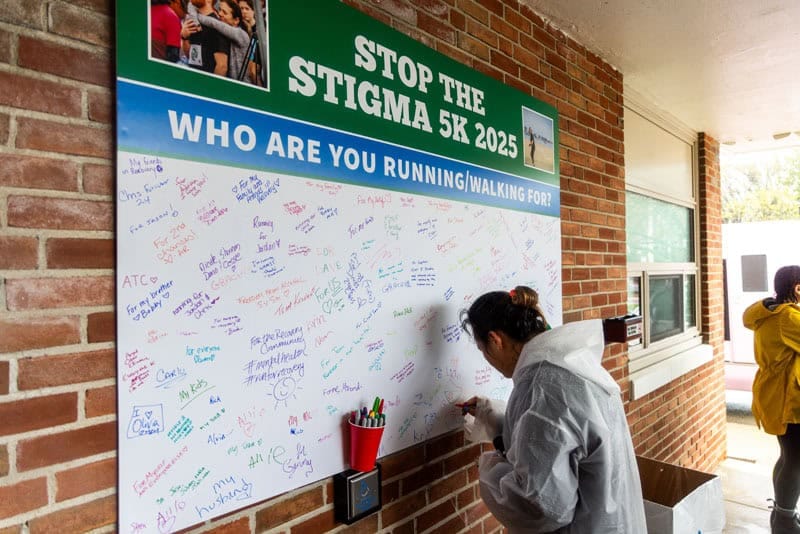
We host the Stop the Stigma 5K each year to challenge stereotypes, encourage acceptance and eliminate stigmas associated with mental health and addiction. Many participants feel a strong connection to the mission and run or walk to support family and friends, or to highlight their own battles with mental illness or addiction recovery. Here are a few statements our participants shared when asked, “What is your connection to the mission of Stop the Stigma 5K?:”
I’ve worked in the mental health field in the past and in social services currently. I see the impact that struggles with mental health can have on children and families and the importance of seeking help. I’m happy to support this mission to reduce the stigma around mental illness and increase accessibility of appropriate treatment and supports.
My brother was diagnosed with mental illness in his twenties. It was a struggle for him with the meds, side effects, and having limited support. He took his life not long after. I believe this cause is meaningful in creating awareness and building better support.
My boyfriend has been sober for more than 2 years after struggling with alcohol addiction. We ran together in honor of all the people he’s met working on their recovery.
Photos by Gary Higgins
Thank You Vendors
Our runners were energized by the great tunes pumping out of our speakers courtesy of DJ Jeff Fowler Productions. A huge shout out to Katie Asack, a group fitness instructor who led us in a fun pre-race warmup.
The Cravery Food Truck was a fun addition this year offering delicious ice cream and acai bowls for our participants to purchase!
And finally, we would like to give a special thank you to the Quincy Police Department for providing officers to make sure that everyone stayed safe.
Case Brabham of Cambridge was the fastest male, with a finish time of 17:51. Maureen Collins of Braintree earned the fasted female title, with a finish time of 21:38. Jacob Lai of Quincy earned the fastest youth title in the under-16 category, with a finish time of 20:29.
Photos by Gary HigginsPhotos by Gary Higgins
Thank You Sponsors
The 2025 Stop the Stigma 5K is sponsored by many generous local businesses, including Presenting Sponsors Arbella Insurance Foundation and Wulfpac Charitable Funding; 5K Level Sponsors The City of Quincy – Mayor Koch’s Office, The Heritage Companies, and New England Medical Group; Gold Level Sponsors Beth Israel Deaconess Hospital – Milton, J. Calnan & Associates, Keohane Funeral Home, and South Shore Bank; and Silver Level Sponsors Abington Bank, Bank of Canton, Blue Cross Blue Shield of Massachusetts, Crocker Electrical Co., Inc., Dedham Savings, First Congregational Church of Randolph, FoxRock Properties, Law Offices of William T. Kennedy, P.C., Lawson & Weitzen, LLP, Massachusetts Convention Center Authority, MountainOne Bank, Point32Health, Puzzle Pieces, South Shore Health, Stop & Shop, United Healthcare and Wellsense Health Plan.
Photos by Gary Higgins
More Photos
Our fantastic photographers, Gary Higgins Photography and Rocky Taverna, captured so many incredible images from the day. Check out our photo gallery of some of our favorites on our Facebook page. Thank you Gary and Rocky!
Photos by Gary Higgins
Save the Date
Save the date for the 2026 Stop the Stigma 5K: Saturday, April 25, 2026.
Hundreds of South Shore children in need opened gifts this holiday season thanks to the generosity of Interfaith’s community of supporters. A record number of families came to us this fall seeking holiday assistance through our Help for the Holidays program.
“We want to make sure that everyone in our community has the food and essential items that they need,” said Rick Doane, executive director of Interfaith. “We also want to make sure that children from those struggling households don’t miss out on the joys of childhood.”
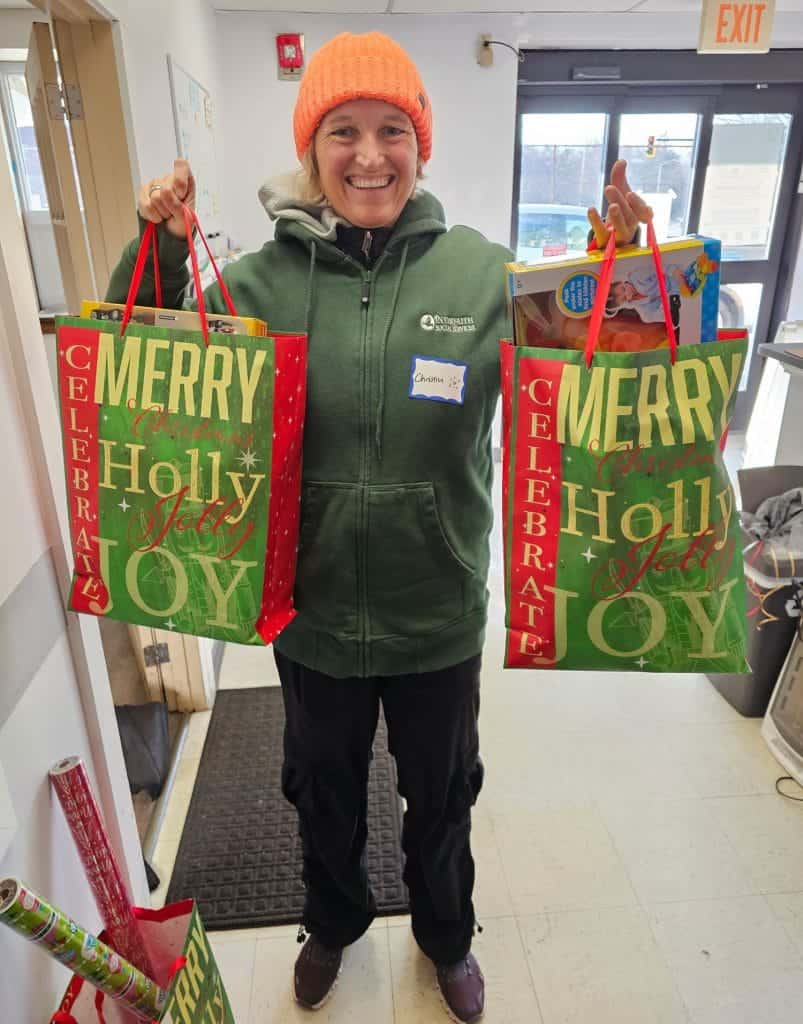
Interfaith Social Services volunteer Christin Eigenmann, of Hingham, holds up a couple of bags of gifts that were donated to the organization’s Help for the Holidays program. Thanks to generous community donors, Interfaith was able to provide more than 6,000 gifts to 1,000 South Shore children in need this holiday season. Credit – Interfaith Social Services Courtesy Photo
“This is only possible because of the incredible generosity of our community,” said Doane. “More people than ever donated and supported our clients this holiday season. It was so heartwarming to witness such a display of compassion and charity.”
More than 400 individuals from the community signed up to sponsor Interfaith’s client families this season, another record number for the agency. In addition, more than 25 local businesses, houses of worship and other organizations signed up to conduct toy drives or host “Giving Trees” at their places of business.
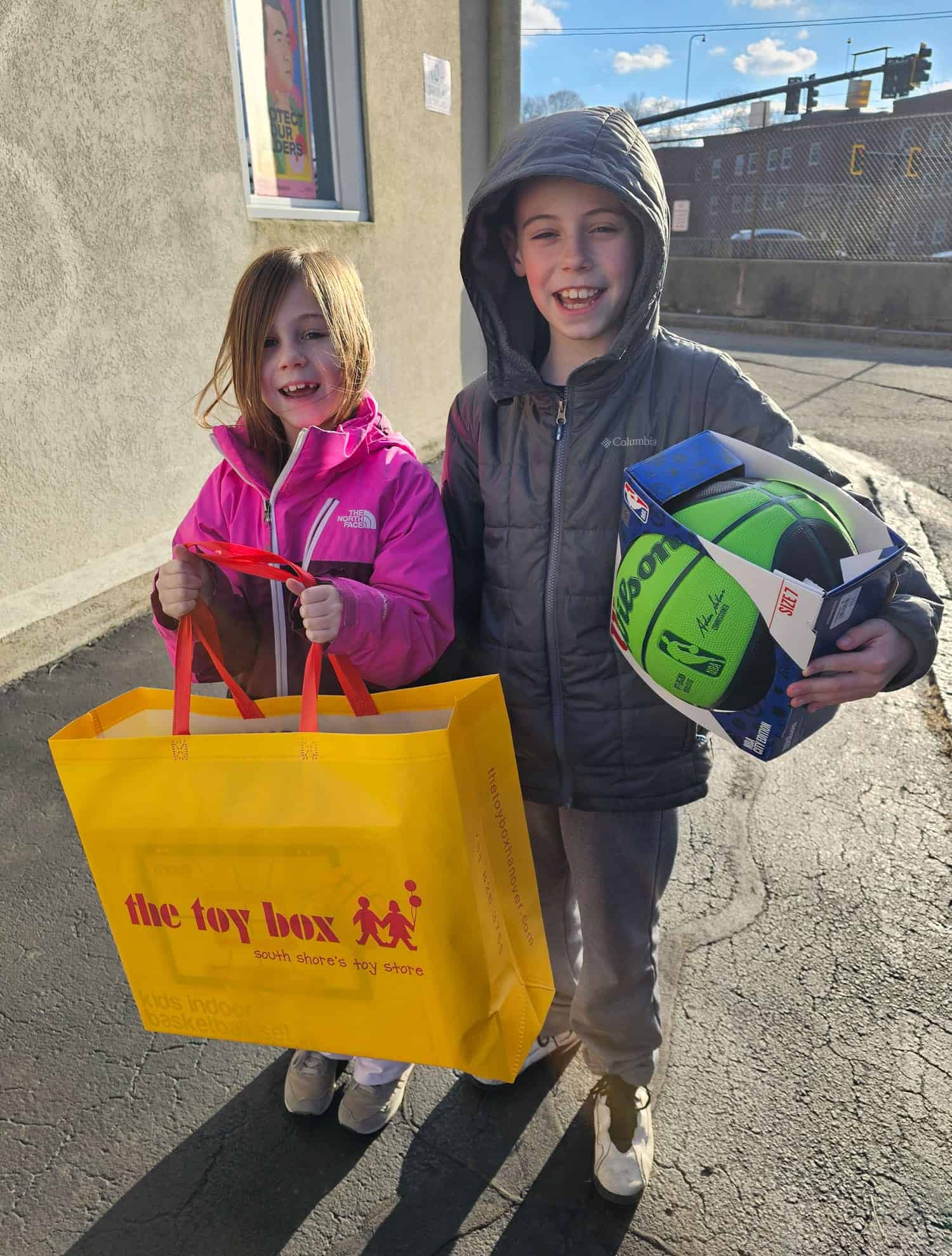
More than 400 South Shore individuals and 25 businesses and organizations signed up to sponsor families through Interfaith Social Services Help for the Holidays program, including this sister and brother pair who dropped off gifts to Interfaith in December. Credit – Interfaith Social Services Courtesy Photo
We would like to thank the following groups for their participation: Adams Shore Association, Ahold Delhaize USA/Stop & Shop, Beth Israel Deaconess – Milton, CB Realty Hingham, Cohasset Sports Complex, D’Allessandro Corp., Emma Lisa’s Breakfast & Lunch, Faith Lutheran Church Quincy, First Congregational Church of Squantum, First Presbyterian Church Quincy, First Spiritual Church of Quincy, The Goddard School (Dedham & Quincy), Houghs Neck Congregational Church, J. Calnan & Associates, Living Hope Foursquare Church, Realtor Nicole Vermillion, Orangetheory Hingham, Paycom, Quincy Point Congregational Church, The Southeast Massachusetts’ Chapter of The New England Mountain Bike Association, Topco, Urban Beauty Lounge, The Village School Milton, WellSense Health Plan, Wicked Loft Cafe and Withum.
Doane said many social service agencies in Massachusetts saw an increase in need this season.
“This year especially has been difficult for many local families, causing them to reach out in greater numbers to food pantries,” said Doane. “In 2023, Interfaith’s food pantry was serving about 1,300 households from Quincy and surrounding towns each month. In 2024, we averaged about 1,600 families each month. We’ve only been able to keep up with this increase because our community of supporters has rallied by increasing financial donations and coming in to volunteer with our programs.”
Interfaith Social Services’ Assistant Food Pantry Manager Leslie Wittmann, who manages the organization’s seasonal programs, echoed those sentiments.
“Donors were exceptionally generous this year,” said Wittmann. “We’re also incredibly fortunate to have a team of amazing volunteers who bend over backwards to make sure that every single child received items that were on their wish list.”
Help us ensure that everyone we serve receives the menstrual hygiene products they need each month!
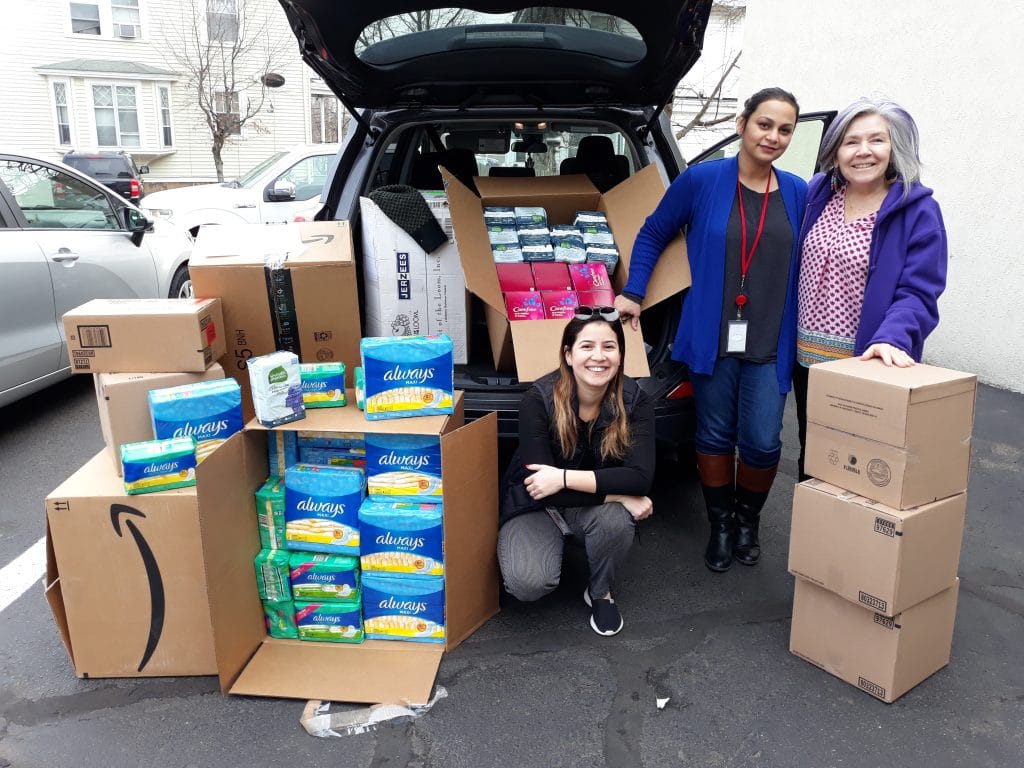
Our food pantry serves approximately 425 people who menstruate every single month. Last year we distributed 101,400 individual pads and tampons! Clients receive 20 pads or tampons each time they visit us. Each bag costs us about $6.30, totaling $2,678 per month.
We are so grateful to community members and organizations who donate and drop off pads and tampons for our clients; but it isn’t nearly enough to keep up with the demand.
With a $25 donation, you can provide 4 bags of menstrual hygiene products to those in need. Make that a monthly donation and you will provide 48 bags per year!
Interfaith is a safety net for thousands of children and families from the South Shore who are struggling to make ends meet. We believe that like the food we provide, menstrual products are a necessity, not a luxury.
Federal assistance programs like SNAP and WIC do not allow the purchase of period products.
The National Institute of Health estimated that 16.9 million menstruating individuals in the United States live in poverty, two-thirds of which are low-income and food-insecure. These individuals cannot afford basic menstrual products. Those who face this scarcity of resources may miss work and school and are sometimes driven to improvise using unsanitary alternatives.
Interfaith is committed to ensuring all the clients we serve never go without theperiod products they need. We rely on monetary donations from caring donors like you to help us maintain this commitment.
We use inclusive language when discussing period products to reflect our diverse clientele. We acknowledge that not all people with periods are women, and that not all women have periods. As such, we avoid using the terms “women,” “girls,” or “feminine hygiene” when referring to menstrual products.
Interfaith Social Services in Quincy operates one such program, diverting more than 434,700 pounds of food last year from the waste stream to the households of Massachusetts residents in need. Since 2009, the organization has rescued more than 5 million pounds of food from local restaurants, retailers and grocery stores.
“This is more than just an initiative to feed the clients served by Interfaith Social Services’ food pantry,” said Interfaith’s Executive Director Rick Doane. “Preventing food waste is part of our collective responsibility to protect our planet and be conscientious stewards of our natural resources.”
Commercial Food Material Disposal Ban
In 2014, the Massachusetts Department of Environmental Protection banned the disposal of commercial organic waste. That meant that no one in the state could dispose of one ton or more of organic material per week. In 2022, they tightened the rule to half a ton per week. So, what happens to that food if it can’t be thrown away? It has to be composted or donated. Interfaith Social Services is part of this solution.
Interfaith’s food rescue coordinators drive a refrigerated box truck around the region five days a week, stopping at grocery stores like Stop & Shop and Trader Joe’s and retail establishments such as Target. At each stop they load up the truck with food that the stores can no longer sell. Interfaith also partners with local food rescue organization Spoonfuls for weekly deliveries of perishable foods they recover.
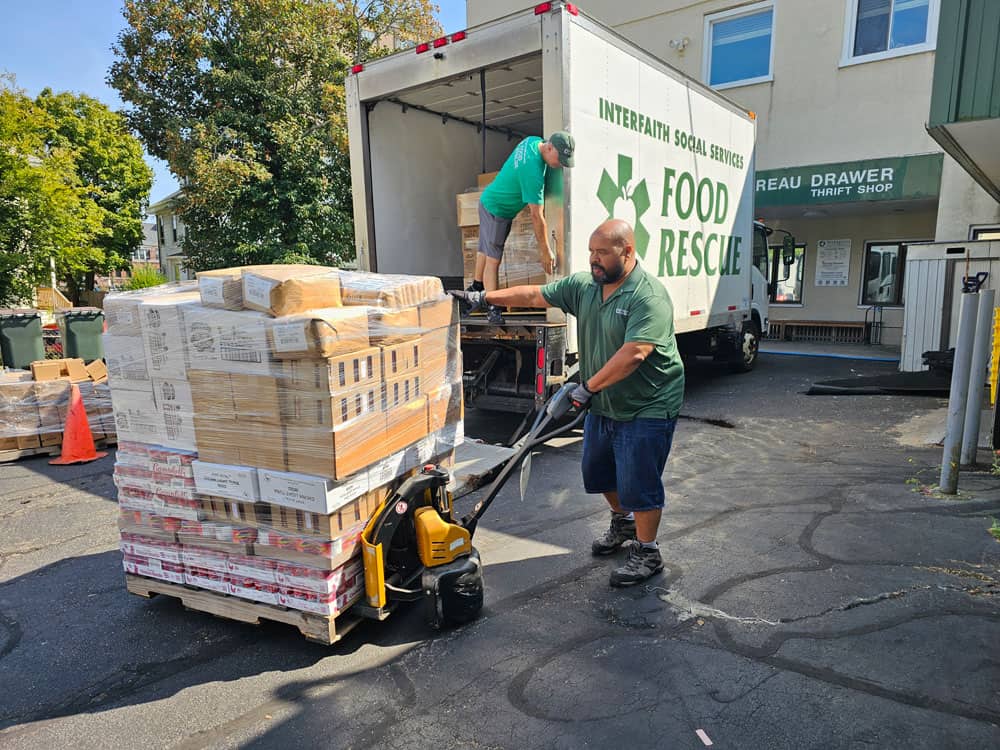
Interfaith Social Services’ Food Rescue Coordinators Geoff Bowen (foreground) and Dritan Spiro assist in recovering more than 8,000 pounds of food each week from local grocery stores and retailers. The rescued food, which otherwise would have ended up in landfills, is redistributed to the organization’s food pantry clients.
“For the most part, this is perfectly good food that would otherwise be heading to a landfill,” Doane said. “In some cases, the store may have over-ordered a product or the best buy dates are quickly approaching. As stores restock with new items, the old ones are pushed out and that’s what we’re rescuing.”
Doane credits local store managers who are committed to this initiative with the success of the program. “Many companies have corporate policies that mandate food must be donated, but it takes the dedication of the store’s employees and management to turn those policies into a reality,” said Doane.
Volunteer Efforts
When the boxes of food rescued from supermarkets return to Interfaith’s food pantry in Quincy, a team of volunteers sort and shelve it, making sure that the food is fresh and within food safety guidelines.
“We make it a point to only distribute food that we would feed our own families,” Doane said. “If it’s not in good enough condition to feed our own kids, we wouldn’t want to give that our client families. Interfaith’s volunteers are amazing. They tackle the herculean task of sorting thousands of pounds of food each day. We also work with a local company to compost food that is unfit for human consumption.”
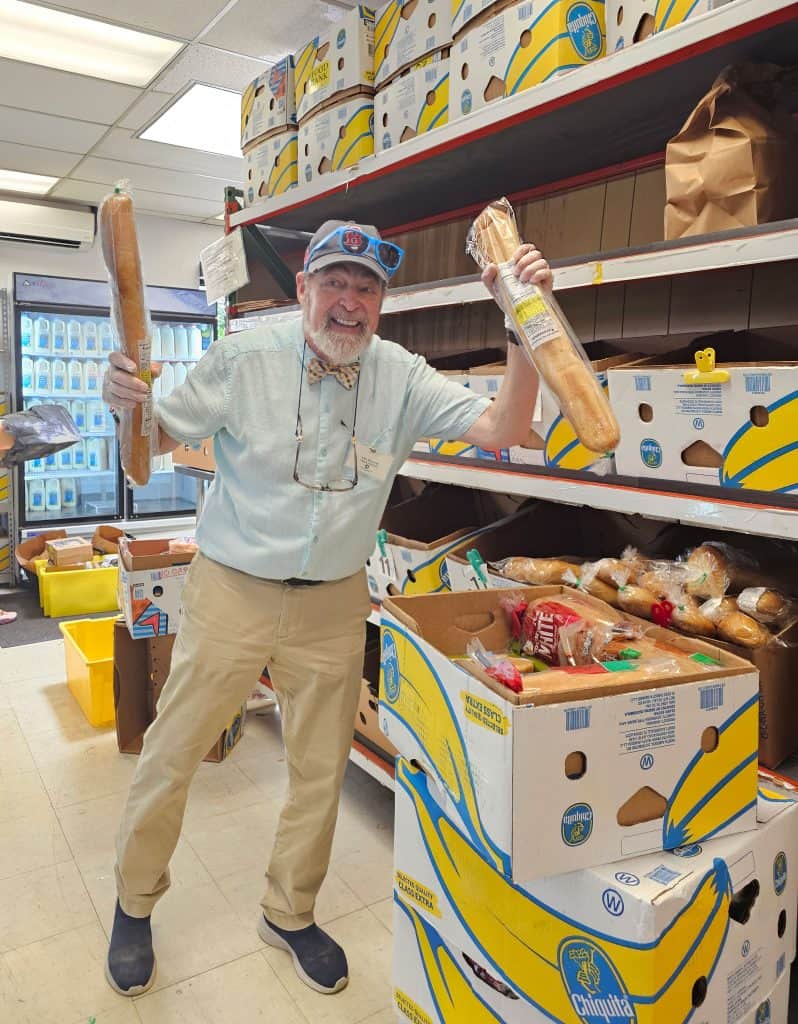
Interfaith volunteer Alan Howarth sorts through boxes of rescued bread.
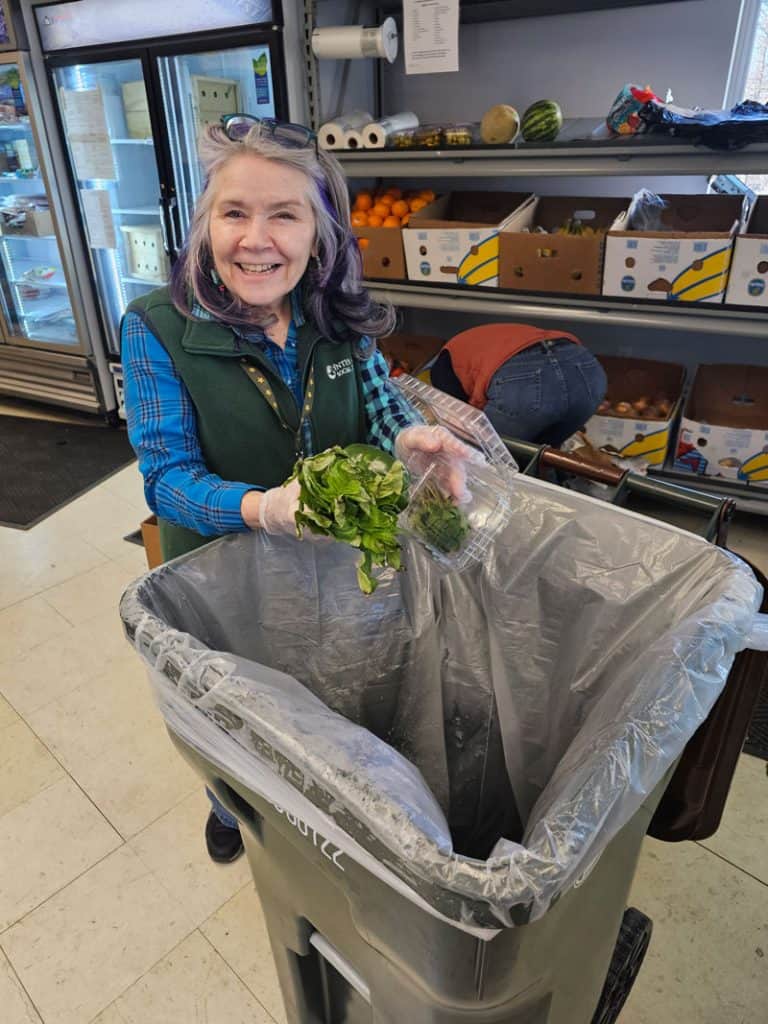
Interfaith’s Food Pantry manager Eileen Kelly composts vegetables that are not fit for consumption.
How You Can Help Make a Difference
According to the U.S. Environmental Protection Agency, the average family spends $1,500 a year on food that doesn’t get eaten.
Here are some tips on how you can prevent food waste at home:
Meal Plan – Plan your meals for the week and purchase only what is needed to make them.
Beware BOGO Sales – Buying in large quantities, or falling for buy one get one deals, only saves money if all the food can be used before it spoils.
Store it Right – Properly store fruits and vegetables to make them last longer and preserve freshness.
Compost – Utilize at-home or city composting services to convert food scraps into soil or energy.
Donate – Nutritious, untouched food can be donated to food pantries.
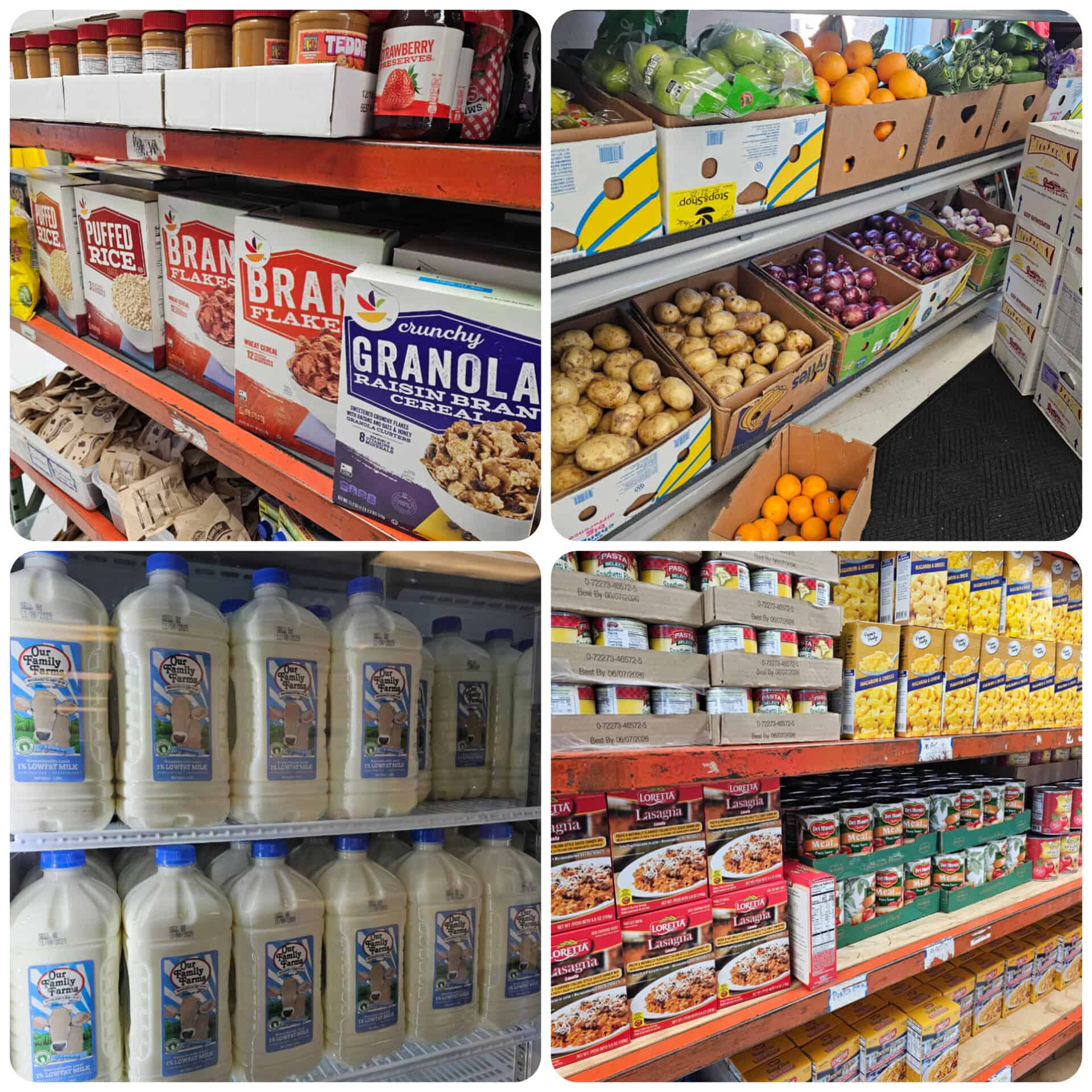

 Fifty years ago, Interfaith’s staff members saw a need in our community and responded with a simple act of compassion. In a small closet, filled with a handful of donated canned goods, our food pantry began. It was a pioneering effort – our emergency food program here in Quincy was one of the first food pantries in the country. The mission in 1974 was clear and it remains a bedrock principle of all that we do: provide a welcoming place where our neighbors can find nourishment and hope.